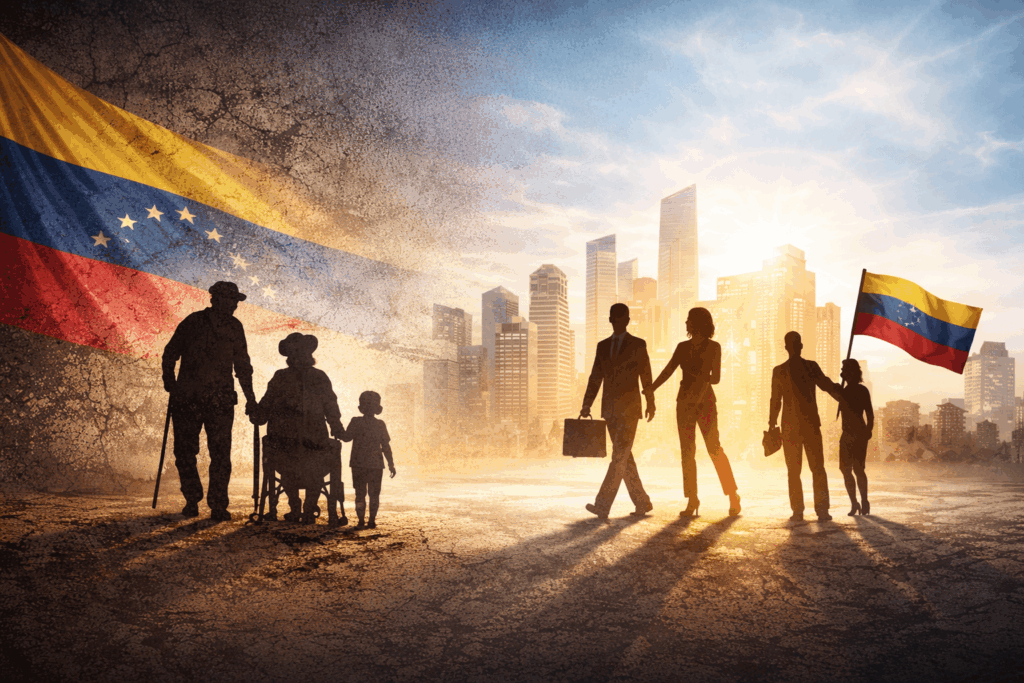
We Venezuelans have codes of humor that unite us, making us accomplices when it comes to joking around. In Venezuela, we tend to do this by saying that a certain place is “a village,” to emphasize the humility and simplicity of the area, and perhaps contrast it with a major city of which we are commonly proud. So “village” has always been in our minds as an underdeveloped place.
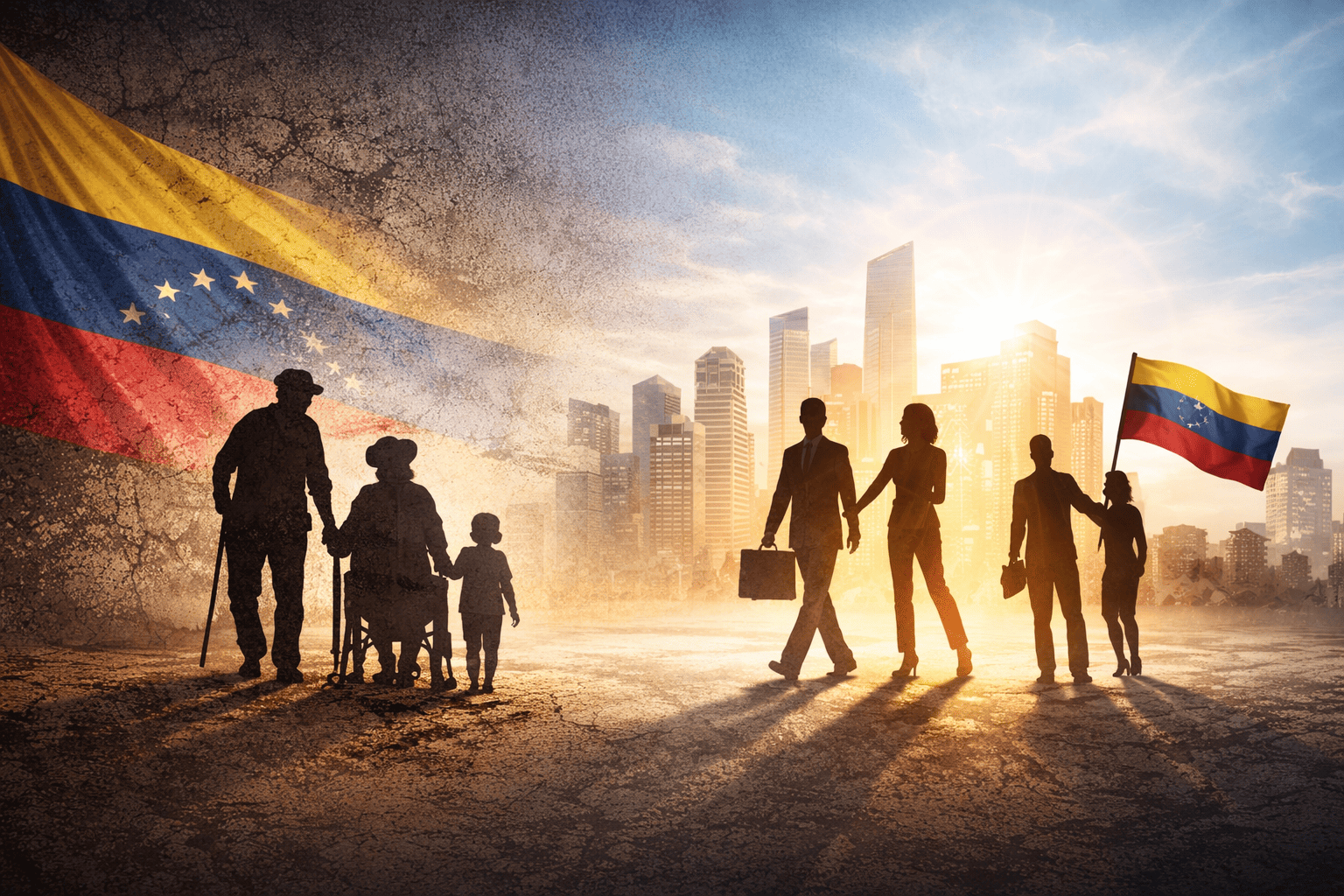
Unconsciously, we often draw a sharp contrast between what is supposed to be a “pueblo” (town/people) and what constitutes a “ciudad” (city). A town represents an underdeveloped, non-urbanized place, while a city represents the opposite, in short. However, objectively speaking, the “pueblo” is the collective body of people in a place, region, or country, while the “city” is an urbanized settlement that is economically and socially developed, and which, by the way, does not depend on agricultural or livestock activities. It seems that one term refers to the collective of people, while the other refers to the conditions in which a group of the population settles and lives in an urbanized setting. Let’s keep in mind, with the idea of urbanism, the notions of order, progress, and modernity.
Now, be that as it may, after more than twenty years of hearing political actors claim that their struggles and causes are “for the people” (regardless of their positions), it is worth pausing for a moment to examine then what this notion of being “the people” really means… In political language, “the people” always require the assistance of the State to overcome their own economic challenges, to receive aid to supplement through that channel what they cannot find by their own means. That is why they fight and make “the people” their cause. Education, health, dignity for the people! It could be the campaign slogan of any political leader, from any side or party. I would venture to say that “the people” are the raison d’être of the political business; it has always been this way in the social and political developments of our hemisphere.
However, in Roman culture, citizenship was a matter of category and distinction. Being a citizen was a privilege, a question of status involving full freedom, participation in the political and social life of the empire, and even a particular attire (the toga) as a sign of the dignity of the “Civitas.” So, in light of the permanent discourse that “we are the people” without considering other concepts that vindicate our civic duties and rights, it is worth questioning the matter.
And will it always be this way? I wonder. When will we cease to be “the people” that requires the permanent assistance of the State? When will we begin to feel like citizens in full exercise of our rights and with the knowledge and commitment to assume our duties? Let me stop here, for a citizen is supposed to be: a person considered as an active member of a State, holder of political rights and subject to its laws. It is also defined as an inhabitant of a city or, in a broader sense, someone who belongs to a community, with rights and duties. This way of understanding our role in the life of a nation marks a broader and more pertinent perspective for us to advance as a society.
Thinking as citizens means taking responsibility for the civic life of the nation, becoming critical, thoughtful actors with discernment. It means not needing the assistance of others at every moment to find dignity as human beings. It is one thing for the State, in a given life scenario, to intervene in our favor to subsidize medical or educational assistance that we cannot access due to complex economic reasons and other structural vices; it is quite another for a large portion of the population to think that they compulsorily need this permanent assistance to survive. “Intervention,” which, in any case, is subsidized by taxes collected from citizens and the benefit of the country’s own wealth, it is worth clarifying. So, having normalized this thinking, we are very comfortable feeling like “the people,” under the care of others, without our own criteria or willingness to correctly execute a citizen’s role. Letting someone else take charge of our destiny, our prosperity, our well-being.
The most difficult transition is not going to be the transfer of power between politicians from one side to politicians from another side. Or from politicians of one faction to others of the same faction, or from politicians from one side and the other who meet to try to reorganize the distribution of power in the country. That transition comes as an unavoidable consequence of the pulse that history itself is tracing today to reorient the nation’s direction. Undoubtedly, the most difficult transition comes from each one of us who have stayed behind, who need to abandon the lazy dimension that accompanies the vision of “being the people” (in the abusive connotation that has been given to the term) and embrace the responsibility we have today to be citizens committed to our diverse roles, to the growth and well-being of the nation.
The most difficult transition will be that of those who migrated, and who learned to be “citizens” by force, in countries where things cost money and are paid for, where norms are respected, where laws are obeyed, where rights are safeguarded by the State, and duties are demanded as essential for civic integration. Those who are rejoining this game, welcome, but come with the same civic learning that you acquired the hard way in other latitudes, and do not set it aside feeling too comfortable, “we’re home now.” On the contrary, because we are in our home, let us live together in it building a new citizenship.
The most difficult transition will be that of re-educating ourselves and beginning to educate from a responsible perspective the new generations so that they do not remain as “the people” and commit to being “citizens” from an early age.
The most difficult transition will be the one we face, individually and collectively, towards a more just, honest, and virtuous social model—the one facing the public official who learned to live at the expense of the people, and the one facing the people who learned multiple underhanded ways to obtain some favor that would solve or alleviate their needs.
In short, many are alert and demanding “transitions,” but it is indisputable that the real transition, the most difficult, but the most necessary, is the one that will come from our change of mind (Gr. Metanoia) and from the reformulation of a new way of being proactive and responsible citizens of this beautiful Venezuela.
By Abihail Lara
Venezuelan writer, theologian, psychologist, and entrepreneur
Instagram: @Abihaillara